
Connecting security, governance, and philanthropy
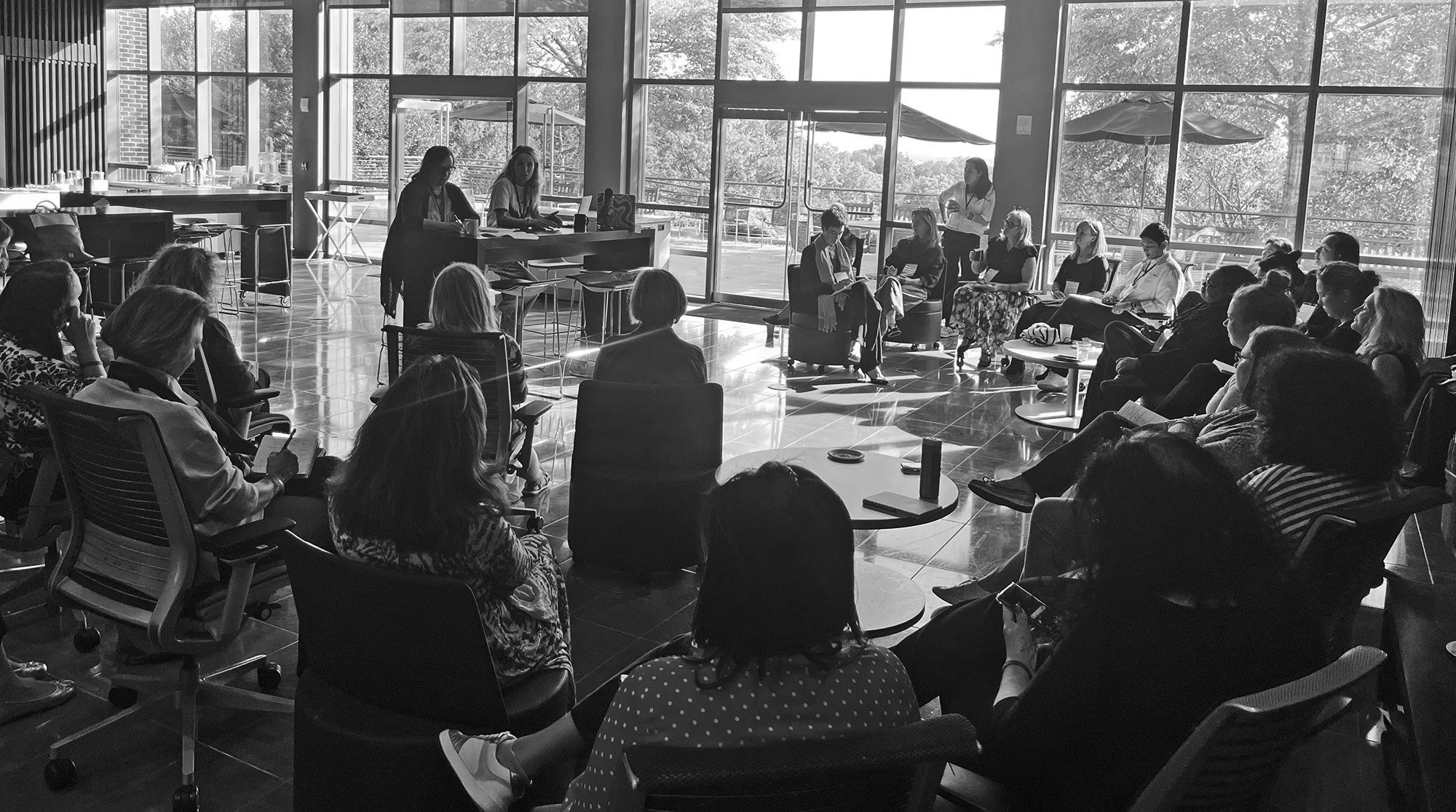
Really honest spaces where people from really different disciplines come together and talk is so rare. It is vanishingly rare. And so for me, to have this space with a group of people who really share some central values around care, is unbelievable and really special.
Really honest spaces where people from really different disciplines come together and talk is so rare. It is vanishingly rare. And so for me, to have this space with a group of people who really share some central values around care, is unbelievable and really special.
PHILANTHROPIC LEADER
What We Do
Governance, security, and philanthropy shape how societies understand risk, make decisions, and fund action. Horizon 2045 connects these fields so leaders can respond to threats that interact across institutions and over time. This work helps leaders make present decisions based on a clear definition of security: the conditions in which people and other living systems thrive.
We Study Change
Change gathers force as it travels, combines, and cascades through connected systems. We study the risks and disruptions associated with change, then look for openings where new laws, institutions, funding models, or forms of cooperation can support human and planetary wellbeing.
We Envision Change and Surface Opportunity
What happens when ecosystems gain legal standing in court? Courts could treat rivers, forests, and reefs as parties with rights, and war could carry new legal standards for ecological harm.
What if feminist foreign policy shaped defense budgets? Governments could redirect security spending and rethink which threats get funded first.
What happens when AI governance sits inside security ministries? Governments could build joint oversight that treats AI, biological, and nuclear risk as connected problems instead of separate ones.
What if philanthropic capital kept shifting into donor-advised funds and LLC-style vehicles? Funders could move faster and respond to emerging threats in real time instead of waiting on annual grant cycles.
We Lead Change and Build for the Future
We build high-trust initiatives in which we collaborate on the redesign of global security governance. We develop the legal frameworks and strategic tools needed to apply it. We align philanthropic capital with work at the intersections between fields. We feed forward what we learn, making our tools freely available for charitable purposes.
Why Now
Research on the entanglements between climate stress, misaligned AI, nuclear weapons, biothreats, and the erosion of democracy and human rights increasingly treats these threats as connected and mutually reinforcing, with compounded risk across systems.
The Evidence Backs This Claim
Catastrophic Risk Research
In 2025 bibliometric review of the global catastrophic risk field identifies interconnected, compounding risks as the defining feature of this moment, with scholars increasingly studying them as a coupled system rather than in isolation.
“Systemic Contributions to Global Catastrophic Risk” (Arnscheidt et al.) argues that catastrophic risk is not exogenous but emerges from within the global system through interacting hazards and vulnerabilities. Its core contribution: risks compound not because bad things happen to coincide, but because they are generated and amplified by the same underlying system. On AI, the paper notes that AI capabilities could reach catastrophic outcomes through interactions with biological and nuclear risk—one illustration of a broader systemic argument.
Governance
Systemic risk research shows siloed institutions consistently fail to anticipate cascading, interconnected crises.
Wales’ Well-being of Future Generations Act is a working counter-example: integration required by statute.
Security
At Davos in January 2026, Canadian Prime Minister Mark Carney said the rules-based international order hasn’t experienced a transition. It has experienced a break.
The Munich Security Conference's 2026 report, titled “Under Destruction,” documents the same shift at the institutional level: political forces across Western democracies now favor dismantling existing rules and institutions over reforming them.
Philanthropy
Funding remains organized around single issues and short grant cycles, not the points where risks compound, a structural problem built into reporting requirements and funding databases.
We Know Better Is Possible
In this complexity, we look for what many institutions miss: openings where better law, better institutions, and better use of capital can turn cascading risk into cascading benefit for human and planetary wellbeing.
We build the shared, working vision of security that connected risks demand, along with practical tools leaders can use across governance, security, and philanthropy.
We can have a new vision of how to achieve security. I feel like I can touch it. I can imagine it being shaped from conversations in this room that do not go through the same familiar well-trodden paths.
WOMEN TRANSFORMING GLOBAL SECURITY MEMBER
Why Horizon 2045
By 2045, humanity will have spent a century living under the shadow of its own destruction: the nuclear weapons century. Horizon 2045 takes its name from that reckoning—and from the possibility of what comes next: a new vision for cooperation on a shared planet, built while we still have time to choose it deliberately.
Horizon 2045 evolved from N Square, a nonprofit funder collaborative that spent nearly a decade working to revitalize the nuclear threat-reduction field. From the beginning, N Square brought new perspectives, ideas, people, and connections into the field, catalyzing more innovative approaches to long-standing challenges.
Over that decade, one lesson became increasingly clear: nuclear risk cannot be addressed in isolation. It is compounded by—and connected to—climate change, artificial intelligence, democratic erosion, and other systemic threats.
Meeting this moment requires boldness, agility, and a clear-eyed understanding of complexity. The Horizon 2045 team brings decades of experience across the public, private, and civic sectors. Through our work in nuclear threat reduction, we learned how to catalyze innovation in systems that have long resisted progress. We now apply those lessons to building the conditions for human and planetary security in an increasingly interconnected world.
That experience led Mary Robinson, former President of Ireland, and Helen Clark, former Prime Minister of New Zealand—both members of The Elders—to choose Horizon 2045, in collaboration with Ploughshares, to convene the network that became Women Transforming Global Security. It is also why the Global Philanthropy Forum, the Impact Center, NTI, and Arizona State University’s Center for Science and the Imagination have partnered with us.
Our Results Back That Confidence
SENIOR LEADERS
50
50 SENIOR LEADERS
Women Transforming Global Security has built a network of nearly 50 senior women leaders, including former heads of state and experts across climate, AI, nuclear, human rights, bio, and democratic threats. Committed to a paradigm of integrated security to reflect the convergent challenges facing people and the planet today, WTGS will pilot the use of new tools and frameworks with government partners and others beginning in 2027.
4.5/5 RATING
The Philanthropic Observatory grew out of a nine-month pilot involving nearly two dozen funders representing $37B in capital, 85% of whom rated the pilot as a 4 or 5 out of 5. The resulting program creates a philanthropic community of practice that helps funders interpret change together and share knowledge across program areas.
4.5/5
RATING
80+ EXPERTS
Lex Mundi Nova has transformed innovative research and 80+ interdisciplinary expert consultations into a coalition strategy to advance new legal pathways to close a loophole the International Court of Justice left open in its 1996 ruling on the legality of nuclear weapons.
80+
EXPERTS

The Horizon 2045 Foresight Radar is in regular use in UN agencies, universities, and NGOs around the world.
Collaborators








Contact Us
Your support drives our impact. Contact our president, Erika Gregory, to learn more and discuss where your work connects with ours.