
News & Perspectives
This is where we share what’s on our minds.
You'll find perspectives on global security, international law, emerging technologies, and the interconnected challenges shaping our future. We highlight ideas from our initiatives, programs, fellows, and partners, and reflect on the questions that are driving our work.
You'll also find updates from Horizon 2045—including events, collaborations, publications, and occasional reflections on progress, possibility, and opportunities to advance a more resilient and humane world.
Converging Signals: Sudan’s Cholera Outbreak
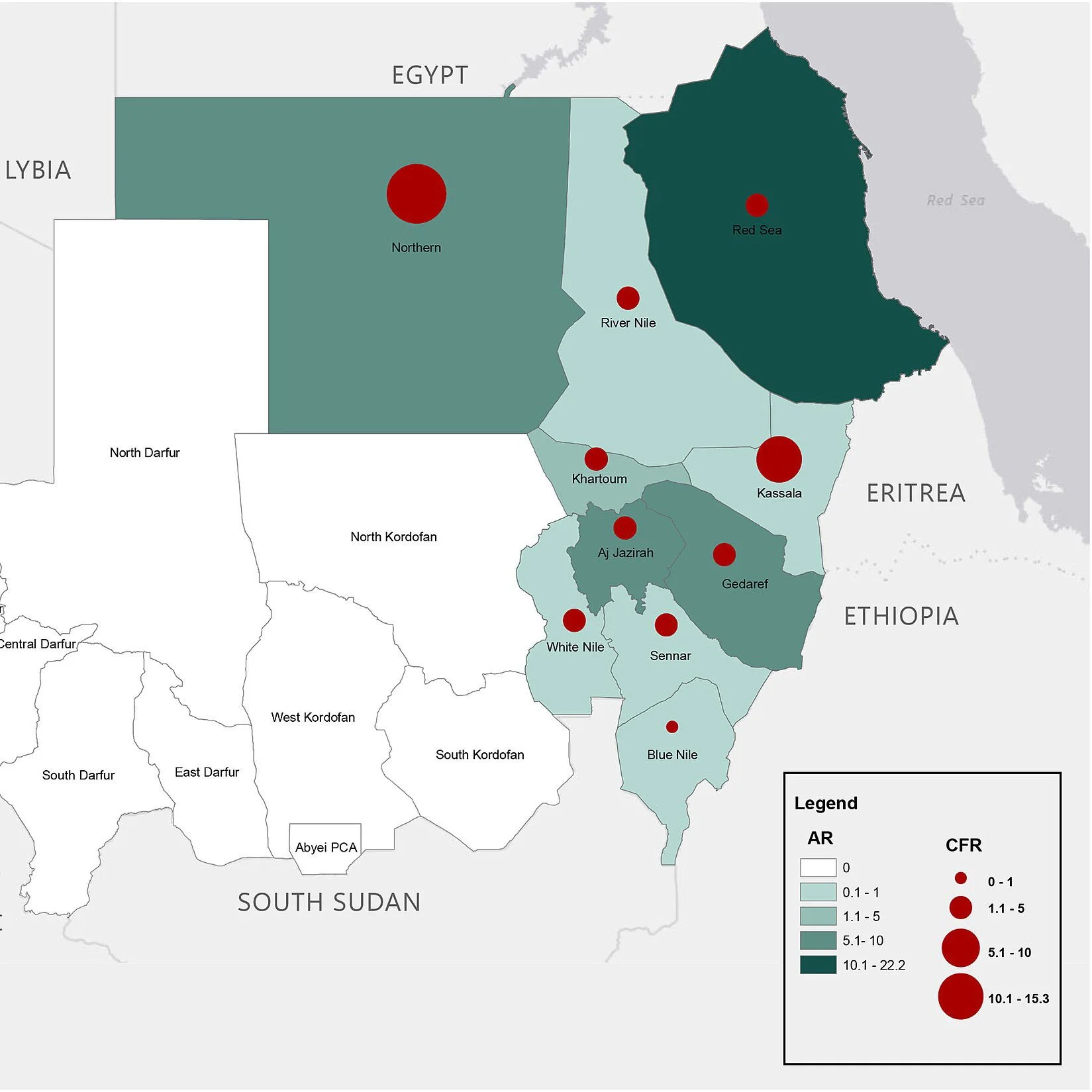
In March 2026, Sudan’s government declared its cholera outbreak over. Two months later, the disease was back, starting in West Kordofan on the line between army and paramilitary control. The Horizon 2045 Foresight Radar treats the outbreak as one problem at the intersection of three domains: authority, materials, and money. It cannot predict a crisis like the cholera outbreak in Sudan, but it suggests that when multiple signals appear at once, there is reason to act early.
11/2026

The Seven Shifts: Becoming Accountable to the Natural World
In January 2025, hundreds of Taranaki iwi traveled to Wellington to watch New Zealand’s Parliament recognize Taranaki Maunga, a mountain, as a legal person. The law gives the mountain a representative body to speak for it and embeds its wellbeing in government decision-making. The third of the Seven Shifts explores what it means for humans to become accountable to the natural world, from ecocide laws to rights-bearing ecosystems. Read here to learn why protecting the living systems on which we depend must be integral to security and governance.
11/2026
Introducing 'The Reframe'
Last week Horizon 2045 launched a Substack: The Reframe. It will be where Horizon 2045 shows its work. We start from the idea that today's biggest risks—nuclear danger, climate change, ungoverned AI, the erosion of democracy & rights—aren't separate problems. They exacerbate & complicate each other. Read & subscribe: reframe2045.substack.com
10/2026
Reading Across Domains: Water, Governance, and Security
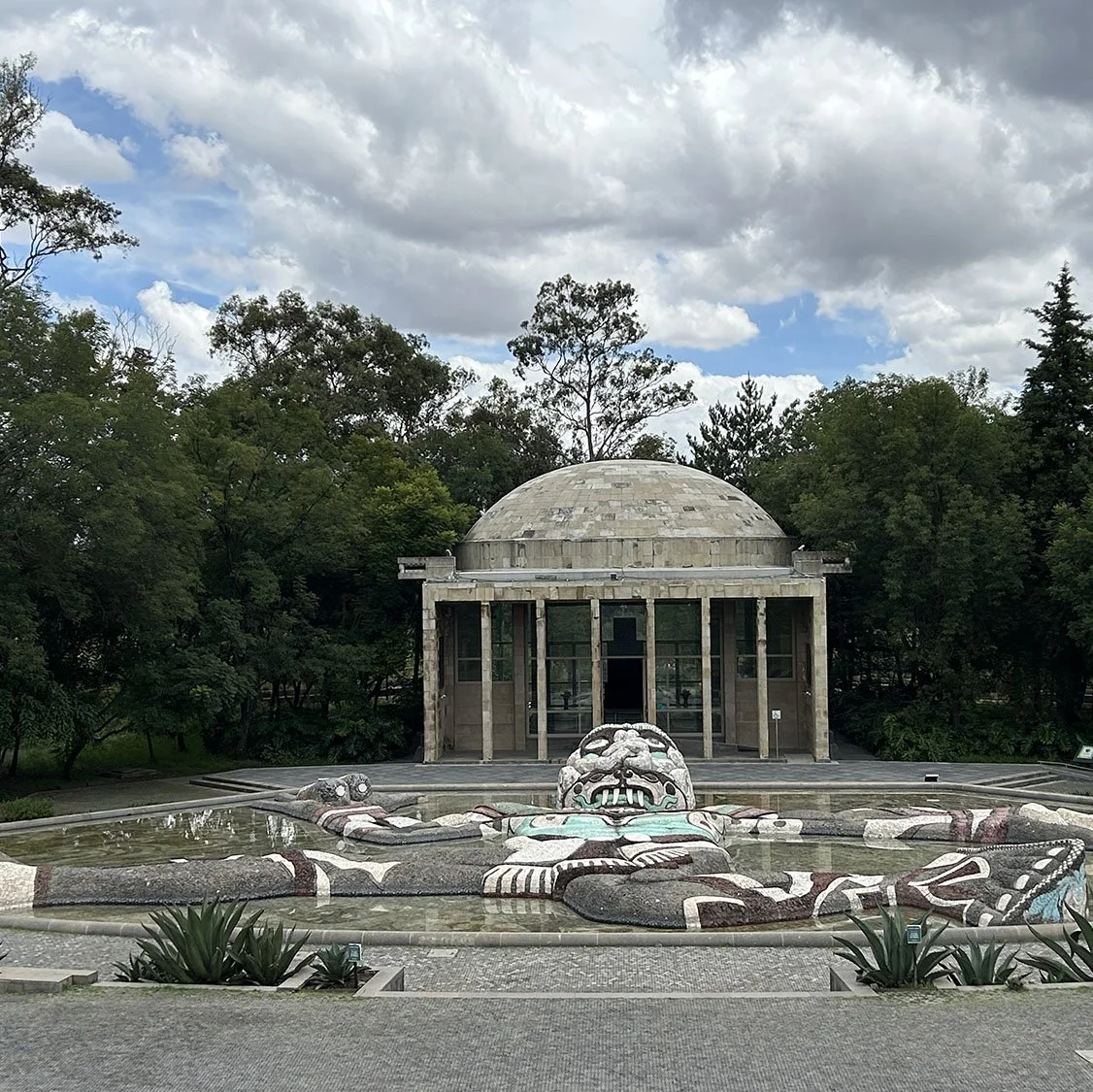
In Mexico City, reliable access to water reveals how environmental challenges intersect with governance, inequality, and human security. Drawing on Horizon 2045’s Foresight Radar, this piece examines how environmental pressures connect to political decisions shaping communities’ access to essential resources. Funding, infrastructure, and public participation all shape the effectiveness of climate adaptation. Read here about how cross-domain foresight can help identify emerging vulnerabilities and why successful adaptations ultimately depend on households’ experiences.
10/2026

The Seven Shifts: Safeguarding the Wellbeing of Future Generations
As Canada’s first youth-led lawsuit heads to trial, fifteen young plaintiffs are asking a fundamental question: what do present-day governments owe the people who will inherit their decisions? The second of Horizon 2045’s Seven Shifts explores the move toward safeguarding the wellbeing of future generations. It considers how short-term decision-making transfers climate, nuclear, social, and ecological risks across generations, and how more integrated approaches to security, governance, law, and philanthropy can help build the conditions for a livable future.
09/2026

The Seven Shifts: Untethering From the Past to Protect the Future
As wildfire season reshapes summers across the United States, communities are confronting not only physical loss but the difficult choices that follow. This first installment in the Seven Shifts series explores the need to mourn what cannot be preserved while adapting to a changing climate and evolving risks. Read about the first of the Seven Shifts here and learn how security must move toward protecting what remains, releasing what cannot be saved, and building resilience for an uncertain future.
08/2026

Redefining Security for the Future
Security is a moving target. Its meaning shifts era to era, and its interpretation depends on who’s asking and what they’re most afraid of losing. Horizon 2045’s Security & the Future: 2030 Scenarios makes this vivid by imagining three alternative futures branching off from the same starting point—the year 2024. Read Redefining Security for the Future to see what each scenario reveals about what societies choose to protect—and what it might mean for the decisions we're making today.
07/2026

What a 2095 Vision Can Tell Us About Our Work Now
In 2023, a group of fellows convened by N Square was asked to engage in a thought experiment: what becomes possible if nuclear weapons are removed from the human story? Fifty years after an imagined disarmament date of 2045, how might the world be organized in their absence? The result, An Operating System for the 22nd Century, is a catalog of eight interlocking systems—new forms of security, citizenship, energy cooperation, legal accountability, and more. Reading it today, the resonance with Horizon 2045’s current work is hard to miss. Learn more about the Operating System and our work here.
07/2026

Scanning the Horizon: Inside the Foresight Radar
The world's most pressing threats–nuclear risk, climate change, democratic backsliding, shifting geopolitics–don't exist in isolation. They intersect, amplify each other, and move faster than traditional security frameworks can handle. The Foresight Radar is a tool built to address this reality, tracking over 500 signals of change across seven domains to help leaders anticipate crises. Drawing on expert collaboration and translated into three scenarios for 2045, it offers decision-makers something increasingly rare: enough warning to prepare. Read Scanning the Horizon here.
06/2026

Why We Created Watershed
The frameworks being built and tested in this decade have to be written for a world where cooperation is the operating logic rather than the exception. The redesign we need requires that serious people can work on consequential ideas together in public, across the boundaries that usually keep them apart. That’s why we created Watershed. The inaugural issue looks at the history of—and rationale for reinvesting in—strategic foresight as a tool for contemplating the future of nuclear weapons. Read more about our plans for Watershed here. Jump to the zine here.
06/2026

The ICJ Advisory Opinion on the Legality of the Threat or Use of Nuclear Weapons 30 Years On
Our initiative, Lex Mundi Nova, has launched a six-part webinar series exploring the legacy of the landmark 1996 ICJ Advisory Opinion on the Legality of the Threat or Use of Nuclear Weapons. With expert panelists from around the world, the series examines how international law and science have evolved over three decades — and whether the opinion's ambiguities can be resolved in light of today's legal, technological, and geopolitical realities. Learn more and register here.
04/2026

Unfolding: The Year in Review
In 2025, we focused on three major initiatives that embody our vision that global security must be reimagined through interconnected approaches that bridge traditional silos. Each demonstrates our core belief: the most intractable problems of our time—climate breakdown, ungoverned AI, nuclear threats, democratic erosion—cannot be solved in isolation. They demand systems thinking, cross-sector collaboration, and the courage to challenge outdated paradigms. Read our 2025 Annual Report.
03/2026