
Reading Across Domains: Water, Governance, and Security
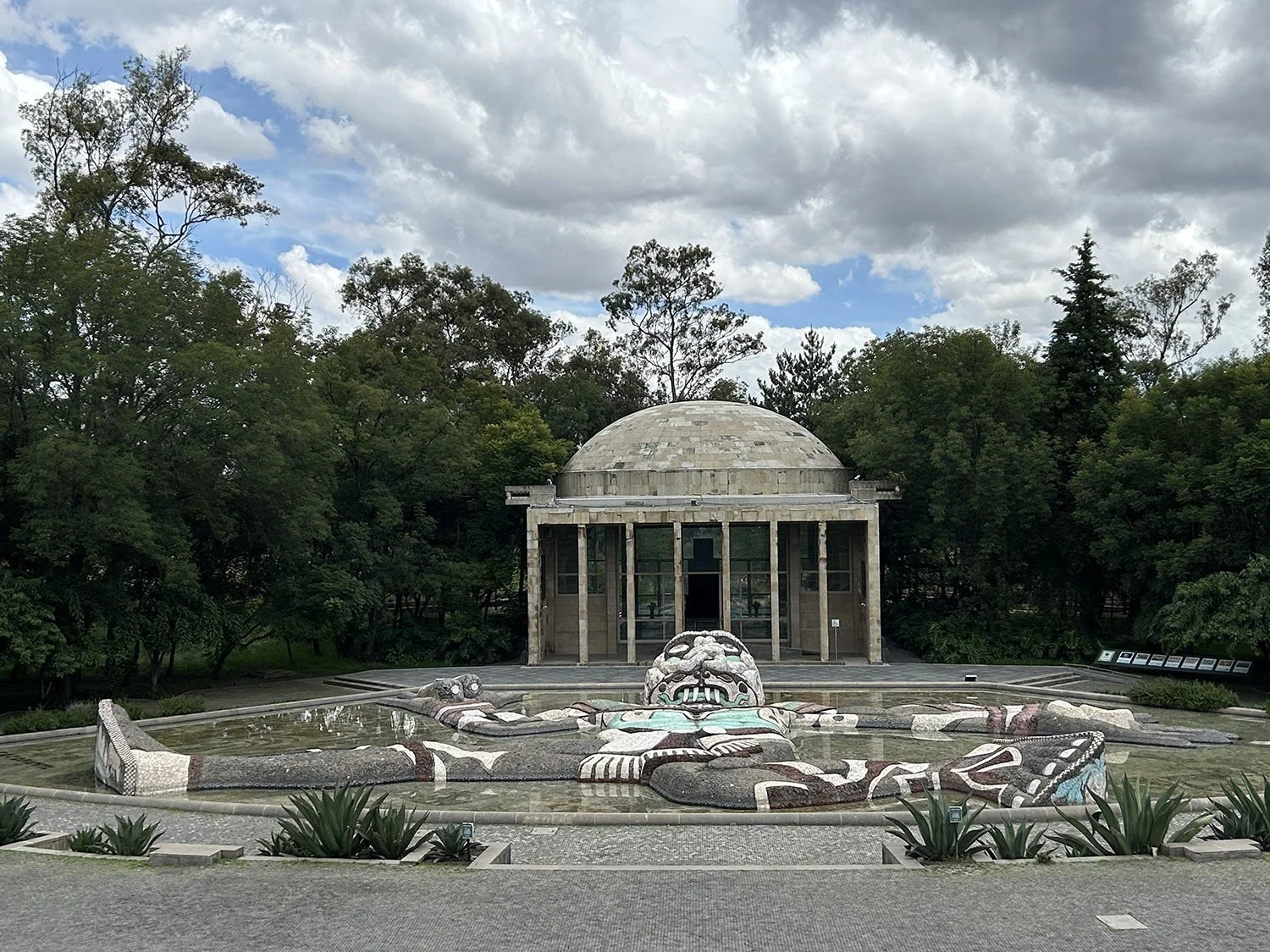
Cárcamo de Dolores in Chapultepec Park, Mexico City;
photo by Lisa DeYoung
In Mexico City’s Iztapalapa borough, unreliable water service makes a basic necessity a household expense. Families plan their days around deliveries, and when it doesn’t arrive, they are forced to pay private sellers. A 2021 study by Columbia University’s Climate School found that households in some informal communities in Iztapalapa and Xochimilco spent more than the equivalent of $500 a year on securing water, nearly three months of minimum wages at the time.
At the recent Women Transforming Global Security (WTGS) convening in Mexico City, women leaders examined the city’s water system through the lens of security. This framing treats water as a matter of public power in addition to engineering and infrastructure. Decisions about system design can promote unequal access and vulnerability, or create opportunities for public participation, local resilience, and collective care.
Horizon 2045’s Foresight Radar helps readers examine these connections. It maps signals of change across seven domains, including Environment and Governance & Politics. Reading these domains together shifts attention from environmental pressure to the institutions that are responsible for responding to crises.
Rainwater harvesting offers a concrete example of this relationship. The Mexico City government partnered with local NGOs to install rooftop collection systems in areas with chronic water shortages. By January 2021, the city had installed more than 20,000 systems for residents. Public funding helped make this technical solution accessible to households that otherwise struggled to secure water.
The intervention also reveals governance questions behind adaptation: who qualifies for a system, who pays for installation, and who supports residents when systems need maintenance? These connections are found between the Radar’s domains. Starting with an environmental signal, such as pressure on water supplies, analysts can examine how governance decisions—including funding allocations and support for specific communities—produce consequences. The Foresight Radar invites this kind of cross-domain analysis rather than treating each signal as an isolated issue.
Although the Radar cannot predict which city will lose access to stable water sources, its signals can help governments identify where uncertainty may concentrate, and where decisions about funding and infrastructure will matter most. Identifying those pressures is only the first step. Governments also need ways to learn whether their responses are working. That evidence will appear at the household level. If an adaptation plan succeeds, residents should spend less time, money, and effort securing water. If those burdens persist, the plan may have expanded infrastructure without changing who can rely on it. The measure of effective governance, then, is not the number of projects announced, but whether households experience more dependable access to a basic necessity.
Author: Ava Lee-Green, Horizon 2045 Intern
